
A Tier 1 Supplier Reduces Scrap and Improves Manufacturing Quality with Data-Driven Production Analytics
€0.5M
saved in scrap, energy and inefficiency
You are being redirected. If nothing happens, please click below to read the case study.
About the study
The Real Cost of Scrap in Precision Manufacturing
A global Tier 1 industrial manufacturer operating high-volume production lines for precision-engineered components faces a challenge that affects every manufacturer at scale: produced units failing strict quality criteria - particularly rotational balance or vibration thresholds - cannot be sold and must be scrapped. Each scrapped unit represents lost raw materials, lost energy, reduced effective production capacity, and increased machining and labour costs. When failure detection is late in the cycle, non-recoverable units consume machine time that could have been redirected.
The root cause problem was compounded by fragmented data. Production line data - vibration measurements, process parameters, quality inspection records — was distributed across disconnected systems, making it impossible to correlate process parameters with quality outcomes. Manual analysis workflows slowed root cause identification. Limited visibility into production KPIs prevented proactive decision-making. Engineering and operations teams struggled to quickly identify failure drivers and implement corrective actions before scrap accumulated.
Early Scrap Prediction, Real-Time KPI Visibility, and Correlation Analysis
Key Ward was used to implement a data-driven production analytics workflow with five components: automated ingestion and structuring of production line data - particularly vibration and quality measurements - into a unified data model; real-time KPI dashboards for anomaly detection as it occurs; correlation analysis connecting process parameters with quality outcomes to identify defect drivers; early prediction of scrap risk using predictive models assessing unit recoverability before machine time is wasted on non-recoverable units; and a continuous improvement framework built on structured, repeatable workflows.
The financial impact: more than $576,000 saved through reduced scrap and waste via early defect detection. Beyond the headline, the organisation improved manufacturing quality, reduced machine time losses, accelerated root cause analysis, and increased effective production capacity. The shift was from reactive troubleshooting to proactive, data-driven manufacturing.
What the Full Case Study Documents
The full case study documents the production data integration architecture, the predictive scrap risk model and its validation, the correlation analysis methodology used to identify defect drivers from vibration and process data, and the full financial and operational impact. If your production environment generates data not yet connected to quality decisions, the approach documented here is directly applicable.

Discover How
A Tier 1 Supplier Reduces Scrap and Improves Manufacturing Quality with Data-Driven Production Analytics
Other Case Studies


A Leading Global Industrial Manufacturer Accelerates HVAC Filter Design with AI-Driven Surrogate Modeling


Beyond Aero Accelerates Aerodynamic Design for Next-Generation Aircraft
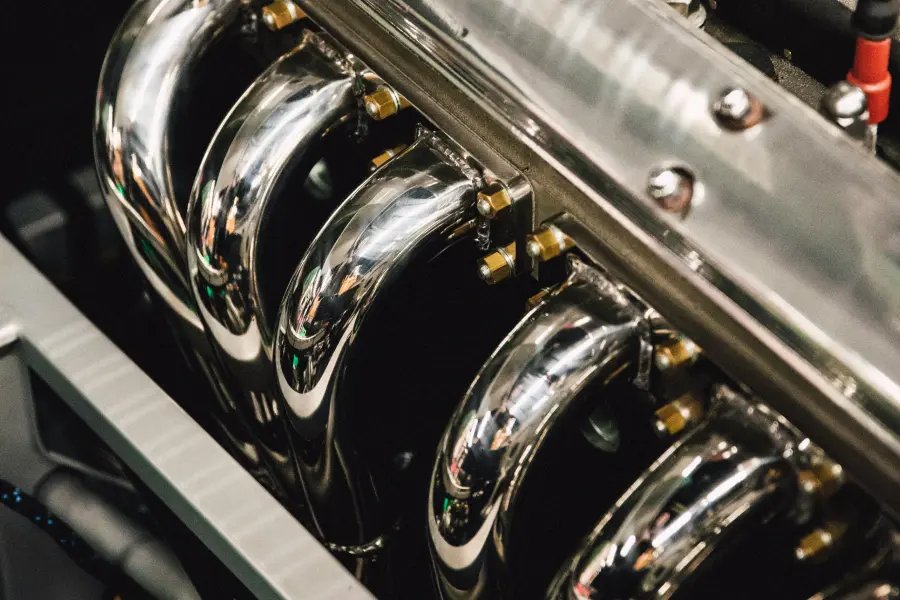
An Automotive OEM Accelerates Root Cause Analysis with Structured Plant and Field Data
Other Case Studies
A Leading Global Industrial Manufacturer Accelerates HVAC Filter Design with AI-Driven Surrogate Modeling

A Tier 1 Supplier Reduces Scrap and Improves Manufacturing Quality with Data-Driven Production Analytics
Beyond Aero Accelerates Aerodynamic Design for Next-Generation Aircraft
