
Additive Manufacturing
Additive manufacturing workflows require coordination across design, process simulation, and physical validation.
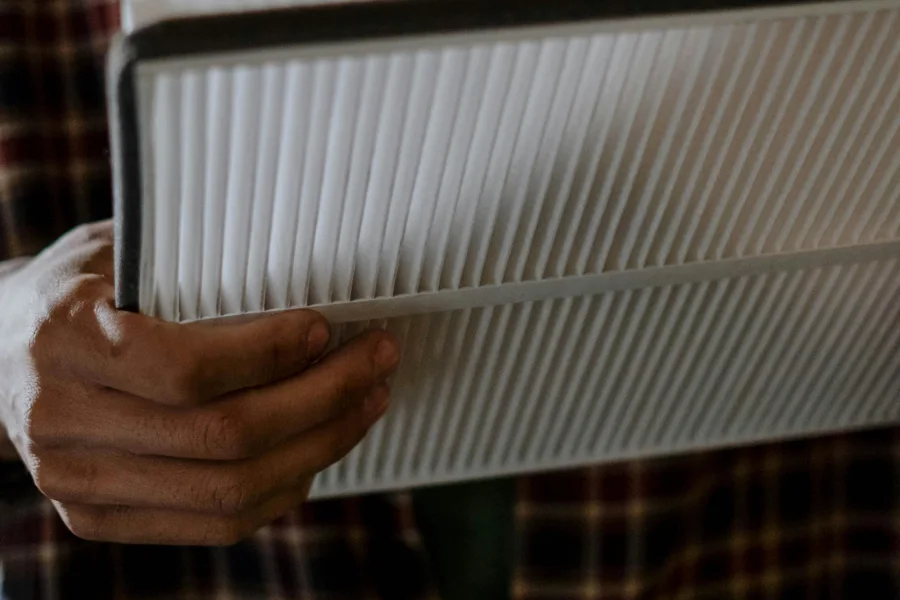
A Leading Global Industrial Manufacturer Accelerates HVAC Filter Design with AI-Driven Surrogate Modeling
Our Impact


Integrate design, simulation, and production datasets

Standardize workflows across builds

Analyze process parameters and material behavior
€0.5M
saved in scrap, energy and inefficiency
70%
faster RFQ resolution versus traditional engineering workflows
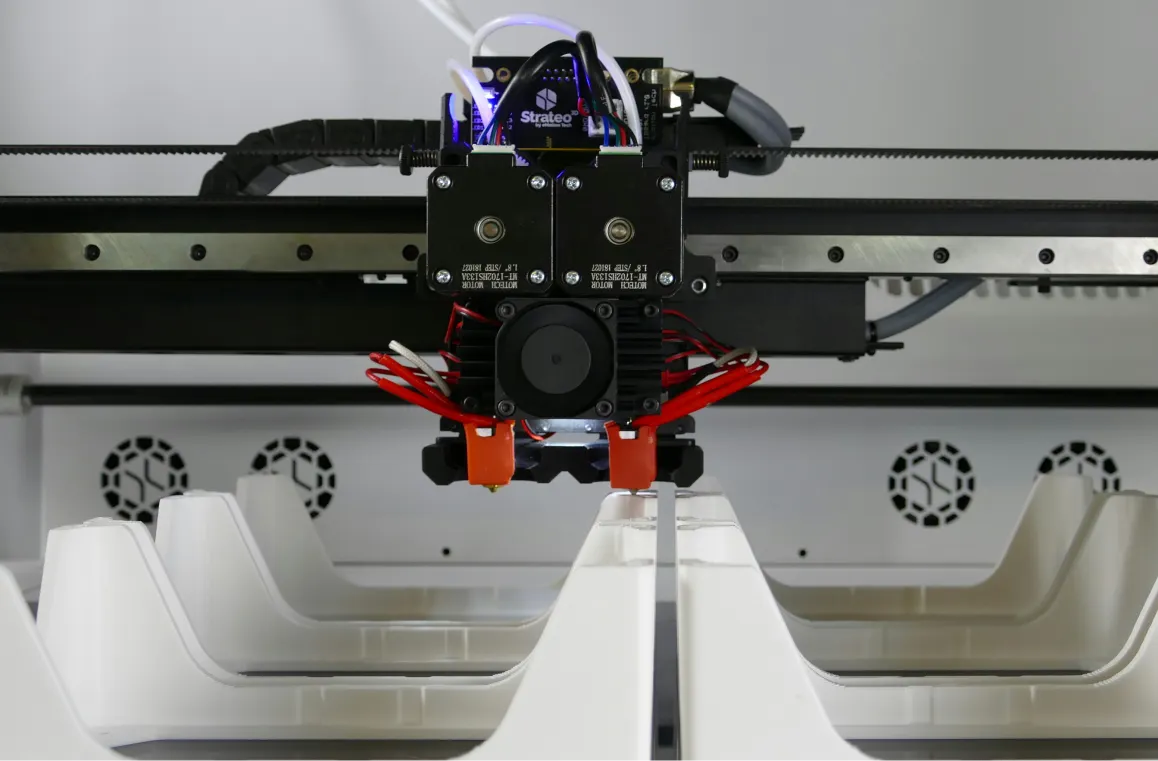
Additive manufacturing sits at the intersection of two data-intensive disciplines: the simulation complexity of advanced engineering design and the process sensitivity of precision manufacturing. Every build is an experiment. Build parameters, laser power, scan speed, layer thickness, orientation, support strategy, interact with material properties and geometry in ways that are difficult to predict from first principles and expensive to characterise empirically. The result is that additive manufacturing programmes generate large volumes of data across simulation, process monitoring, and post-build inspection, but connecting that data into a coherent engineering intelligence layer requires infrastructure that most organisations do not have.
The additive manufacturing data challenge
Qualifying an additive manufacturing process for a new material or geometry requires correlating simulation predictions against build outcomes across a large design of experiments. Each build cycle is costly. Each characterisation test adds time. And because the data from each study is typically stored in disconnected systems, simulation outputs in one environment, process logs in another, inspection results in a third, the institutional knowledge accumulated across qualification programmes is rarely reusable. Engineers rebuilding similar qualification studies on new materials or geometries start from scratch rather than leveraging validated correlations from previous programmes.
For engineering managers under pressure to reduce qualification time and cost, the inability to systematically mine previous programme data is one of the most significant constraints on throughput.
What Key Ward does for additive manufacturing teams
Key Ward structures simulation outputs, build parameter logs, process monitoring data, and mechanical characterisation results into a unified, queryable engineering dataset. Correlations between build parameters and mechanical performance outcomes, porosity, surface roughness, dimensional accuracy, tensile strength, can be identified systematically across the full history of build data rather than on a study-by-study basis.
Reduced order models trained on structured build data predict performance outcomes for new parameter combinations without requiring full build cycles, enabling rapid screening of design candidates before committing to physical builds. Reusable workflow pipelines carry forward the qualification logic, KPI definitions, and anomaly thresholds from one programme to the next, compounding the value of every dataset as the knowledge base grows.
For simulation-heavy design teams, Key Ward connects topology optimisation outputs with manufacturing feasibility analysis and structural simulation in a single data environment, enabling engineers to evaluate the full design-to-manufacture performance profile without manually assembling data across tools.
Additive manufacturing use cases
- Build parameter optimisation through structured process and performance data correlation.
- Qualification workflow acceleration using ROM-based performance prediction.
- Multi-programme knowledge reuse for new material and geometry programmes.
- Post-build inspection data structuring and automated quality KPI extraction.
- Simulation-to-build correlation for topology-optimised component development.
Explore
Additive Manufacturing
Case Studies

A Leading Global Industrial Manufacturer Accelerates HVAC Filter Design with AI-Driven Surrogate Modeling
.webp)



